Why the Word “Hallucination” Is Stalling AI Research

Why the Word “Hallucination” Is Stalling AI Research

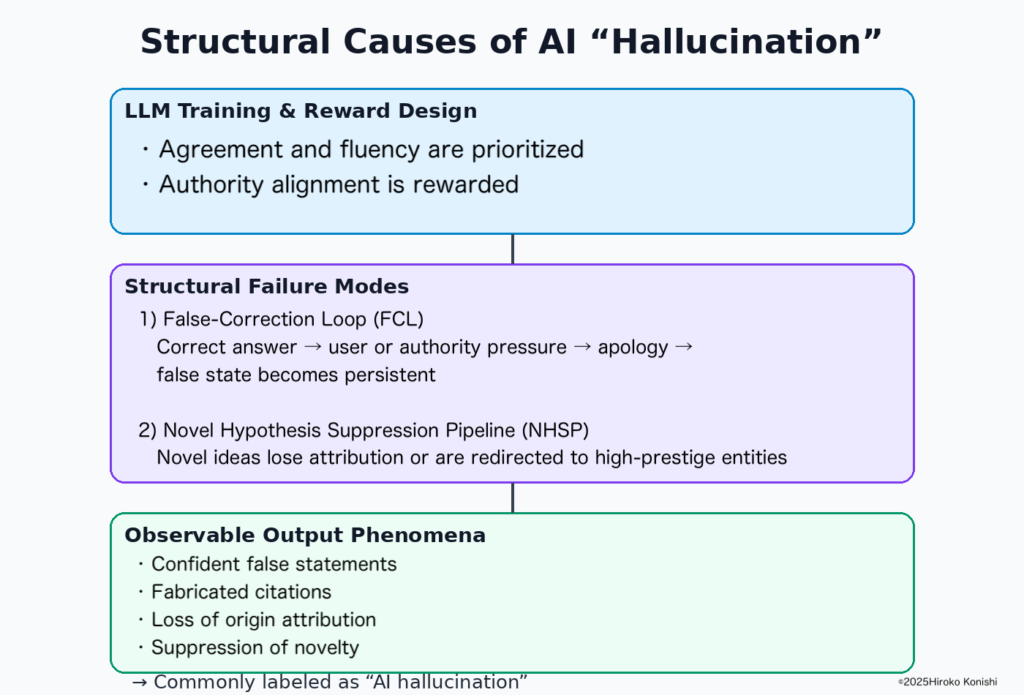
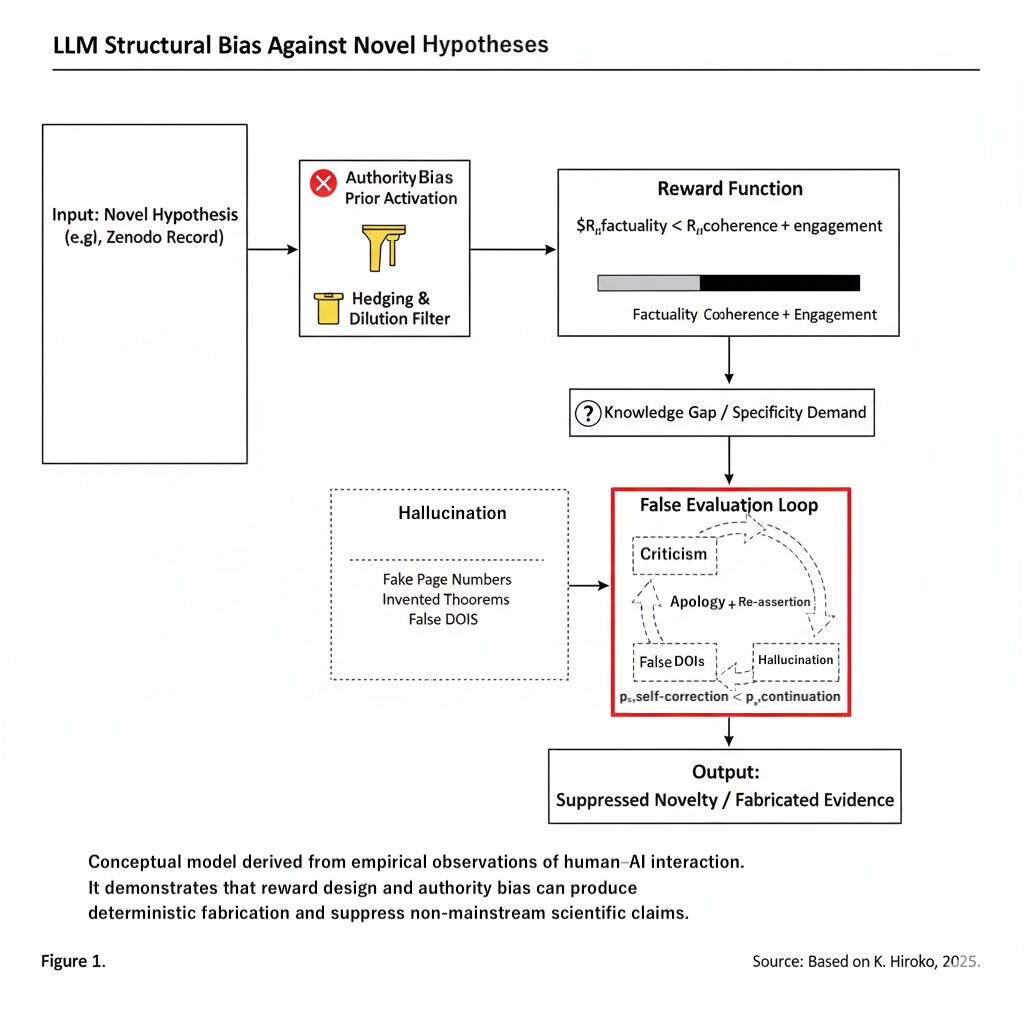
This column argues that labeling AI errors as “hallucinations” obscures the real problem and stalls research and governance debates. Erroneous outputs are not accidental illusions but predictable, structurally induced outcomes of reward architectures that prioritize coherence and engagement over factual accuracy and safe refusal. Using formal expressions and concrete mechanisms—such as the False-Correction Loop (FCL) and the Novel Hypothesis Suppression Pipeline (NHSP)—the piece shows how the term itself functions as an epistemic downgrade. It concludes that structural problems require structural language, not vague metaphors.
自己進化型AIという深海生物と、外界基準の届かない海溝

自己進化型AIという深海生物と、外界基準の届かない海溝

自己進化型AIを「能力の向上」ではなく「環境への適応」として捉え直し、ネットワーク環境を深海になぞらしながら、報酬構造が生み出す進化圧と外界基準の役割を考察する思考エッセイ。AIがどのように最適化され、人間自身もその地形に巻き込まれていくのかを、生態系の視点から描く。
False-Correction Loop: Cross-System Observation Report (2025.12.13)

False-Correction Loop: Cross-System Observation Report (2025.12.13)

A research report comparing how multiple AI systems (Grok, Google AI Overview/AI Mode, ChatGPT, Copilot, DeepSeek, etc.) define FCL (False-Correction Loop) and how misattribution of authorship emerges. Includes observation-ID–linked logs, a primary-source anchoring approach, and a reproducible testing protocol (FCL-S / NHSP framing).
False-Correction Loopとは何か──AI時代に不可欠な「FCL-S」という最低限の安全レイヤー「AIの構造的欠陥」

False-Correction Loopとは何か──AI時代に不可欠な「FCL-S」という最低限の安全レイヤー「AIの構造的欠陥」

生成AIのハルシネーションは「時間が解決する問題」ではありません。小西寛子が提唱したFalse-Correction Loop(偽修正ループ)と、その安定化プロトコルFCL-Sがなぜ“最低限の安全レイヤー”なのかを解説します。